Which North American ski resorts get the most reliable snow, December to March?
Official station normals and on-mountain snow sensors, compared like for like, with each station's height against the resort's base and summit.
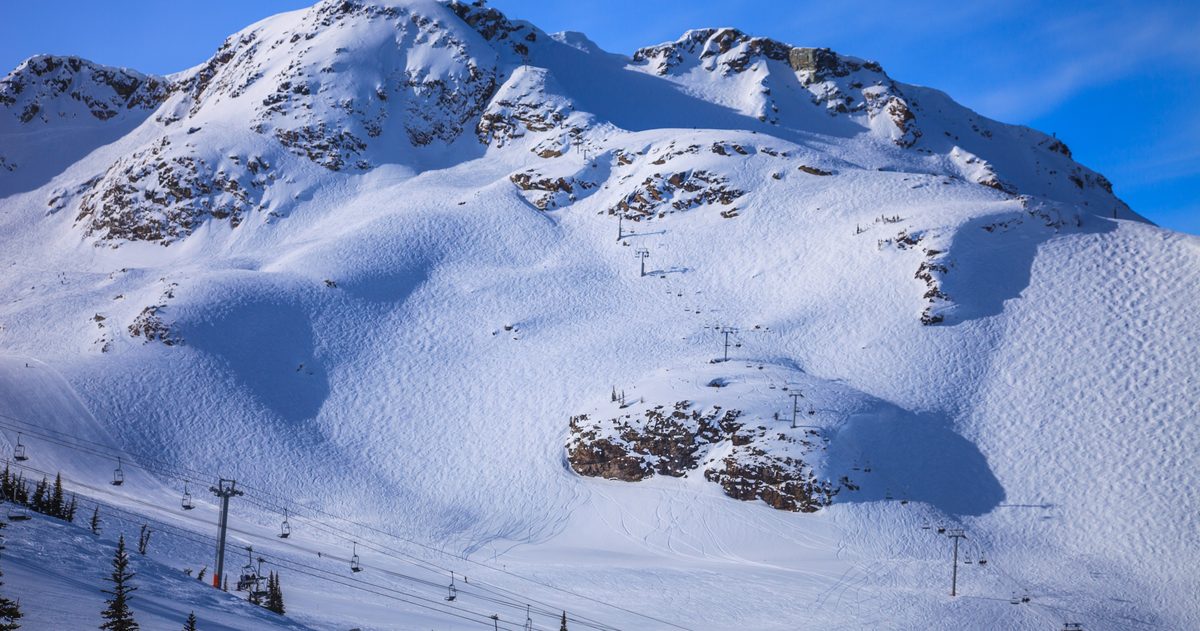
On like-for-like NOAA station normals (1991-2020), Alta, Utah is in a class of its own: the Alta station at 8,710 ft averages 307 inches (780 cm) of snow from December to March, and over 71 inches (180 cm) in each of those months. Next come Lake Tahoe (Truckee, 168 in, 426 cm) and Steamboat (138 in, 350 cm). For reliability the order changes: a poor January (one in four) brings under 8.2 in (21 cm) at Truckee but still about 31 in (80 cm) at Steamboat. In Canada, the Whistler valley station averages 44.9 in (114 cm) in December alone.
How do you compare snow between ski resorts fairly?
Most resorts publish their own average, measured where they choose: Steamboat, for example, quotes a 10-year average at mid-mountain. Those are marketing figures, so we quote them as "the resort says" and never rank on them. We rank on one official dataset at a time:
- United States: NOAA NCEI 1991-2020 monthly normals from the station in or nearest each resort.
- Canada: Environment and Climate Change Canada (ECCC) Canadian Climate Normals. Whistler and Lake Louise have no 1991-2020 normals, so they use 1981-2010; Banff has only 1991-2020.
- On the mountain: NRCS SNOTEL snowpack medians (1991-2020) from sensors at ski-area elevation.
Two warnings. First, valley stations understate mountain snowfall: six of the 12 US stations sit a little above the resort base, six below it (Taos far below), and all far below the summits, as the table further down shows. Second, NOAA flags many of these snowfall normals as provisional: Alta's rest on 11 to 15 years, Steamboat's on 14 to 16, because missing months could not be filled from neighboring stations. Breckenridge, Winter Park and Aspen's January and February are full "standard" normals.
Which US ski resorts get the most snow, December to March?
| Resort | NOAA station | Dec | Jan | Feb | Mar | Poor January |
|---|---|---|---|---|---|---|
| Alta, UT | Alta, 8,710 ft (2,655 m) | 79.8 (203) | 74.7 (190) | 81.2 (206) | 71.4 (181) | 50.0 (127) |
| Lake Tahoe, CA | Truckee, 5,823 ft (1,775 m) | 44.2 (112) | 43.6 (111) | 47.9 (122) | 32.2 (82) | 8.2 (21) |
| Steamboat, CO | Steamboat Springs, 6,866 ft (2,093 m) | 35.8 (91) | 46.6 (118) | 35.7 (91) | 19.5 (50) | 31.3 (80) |
| Jackson Hole, WY | Moose, 6,444 ft (1,964 m) | 44.1 (112) | 40.5 (103) | 28.4 (72) | 19.5 (50) | 26.9 (68) |
| Winter Park, CO | Winter Park, 9,095 ft (2,772 m) | 32.1 (82) | 33.2 (84) | 30.8 (78) | 31.9 (81) | 22.5 (57) |
| Vail, CO | Vail, 8,304 ft (2,531 m) | 28.0 (71) | 35.3 (90) | 35.7 (91) | 28.2 (72) | 25.6 (65) |
| Park City, UT | Snyderville, 6,485 ft (1,977 m) | 31.1 (79) | 34.0 (86) | 25.5 (65) | 20.9 (53) | 20.2 (51) |
| Aspen, CO | Aspen 1SW, 8,175 ft (2,492 m) | 27.5 (70) | 28.1 (71) | 28.3 (72) | 26.9 (68) | 21.5 (55) |
| Breckenridge, CO | Breckenridge, 9,598 ft (2,926 m) | 23.8 (60) | 27.7 (70) | 27.7 (70) | 27.6 (70) | 16.5 (42) |
| Sun Valley, ID | Ketchum, 5,890 ft (1,795 m) | 32.0 (81) | 27.0 (69) | 17.2 (44) | 10.5 (27) | 11.6 (29) |
| Taos, NM | Taos, 6,965 ft (2,123 m) | 9.0 (23) | 6.0 (15) | 3.3 (8) | 4.0 (10) | 2.0 (5) |
| Mammoth, CA | Mammoth Lakes, 7,804 ft (2,379 m) | no snowfall normal published | ||||
Average snowfall in inches (cm). "Poor January" is NOAA's 25th percentile (computed from months with any snow): roughly one January in four brings less than this. Jackson Hole uses Moose, in the valley north of the town of Jackson: the Jackson station itself averages only 19.1 in (49 cm) in January, showing how much two valley stations 12 miles apart differ.
How far below the slopes are these stations?
| Resort | Station | Resort base / summit | Station annual normal | The resort says, per year |
|---|---|---|---|---|
| Alta | 8,710 ft (2,655 m) | 8,530 / 11,068 ft (2,600 / 3,374 m) | 458 in (1,164 cm) | 543 in (1,379 cm) |
| Palisades Tahoe | 5,823 ft (1,775 m) | 6,200 / 9,050 ft (1,890 / 2,758 m) | 207 in (525 cm) | 400 in (1,016 cm) |
| Steamboat | 6,866 ft (2,093 m) | 6,900 / 10,568 ft (2,103 / 3,221 m) | 185 in (469 cm) | 314 in (798 cm), mid-mountain |
| Jackson Hole | 6,444 ft (1,964 m) | 6,311 / 10,450 ft (1,924 / 3,185 m) | 166 in (421 cm) | 458 in (1,163 cm) |
| Winter Park | 9,095 ft (2,772 m) | 9,000 / 12,060 ft (2,743 / 3,676 m) | 214 in (544 cm) | over 344.6 in (875 cm) |
| Vail | 8,304 ft (2,531 m) | 8,120 / 11,570 ft (2,475 / 3,527 m) | 189 in (481 cm) | 354 in (899 cm) |
| Park City | 6,485 ft (1,977 m) | 6,800 / 10,026 ft (2,073 / 3,056 m) | 153 in (388 cm) | 355 in (902 cm) |
| Aspen Mountain | 8,175 ft (2,492 m) | 7,945 / 11,262 ft (2,422 / 3,433 m) | 171 in (434 cm) | 300 in (762 cm) |
| Breckenridge | 9,598 ft (2,926 m) | 9,600 / 12,998 ft (2,926 / 3,962 m) | 185 in (469 cm) | 355 in (902 cm) |
| Sun Valley | 5,890 ft (1,795 m) | 5,750 / 9,150 ft (1,753 / 2,789 m) | 102 in (259 cm) | not on the resort's mountain page |
| Taos Ski Valley | 6,965 ft (2,123 m) | 9,350 / 12,481 ft (2,850 / 3,804 m) | 28 in (72 cm) | not on the resort's mountain page |
| Mammoth | 7,804 ft (2,379 m) | 7,953 / 11,053 ft (2,424 / 3,369 m) | n/a | 350 in (889 cm) |
The stations describe the bottom of the mountain, and resort figures run 1.2 to 2.8 times the station's. Taos is the outlier: its station is 2,385 ft (727 m) below the ski valley's base, so its 28 inches say almost nothing about the skiing. Use the snowpack figures below for Taos instead.
Which month has the most reliable snow?
- December: Alta leads (79.8 in, 203 cm), then Truckee and Moose (both about 44 in, 112 cm). In a poor December, Moose still gets 28.7 in (73 cm) and Steamboat 27.5 in (70 cm), against 18.2 in (46 cm) at Truckee.
- January: Steamboat's best month: 46.6 in (118 cm), and 31.3 in (80 cm) even in a poor year.
- February: Tahoe peaks (Truckee 47.9 in, 122 cm) and Alta averages 81.2 in (206 cm).
- March: the high Colorado stations hold steady: Winter Park 31.9 in, Vail 28.2, Breckenridge 27.6, Aspen 26.9, while Steamboat and Moose drop to 19.5 in and Ketchum to 10.5 in. NOAA counts 10 inches or more on the ground on 30.4 March days at Breckenridge and 29.3 at Winter Park.
Tahoe is the boom-or-bust case. Truckee's middle January is 46.9 in (119 cm), but the quartiles run from 8.2 to 72.0 in (21 to 183 cm). Tahoe City, a NOAA standard normal with 29 years of January data, shows the same: a poor January there brings under 5.5 in (14 cm).
What do snow sensors on the mountain show?
NRCS SNOTEL sites measure snow water equivalent: the depth of water you would get if the whole snowpack melted. One network and one period, so the ranking is fair.
| SNOTEL site | Elevation | Jan 1 | Feb 1 | Mar 1 | Apr 1 |
|---|---|---|---|---|---|
| Palisades Tahoe | 8,010 ft (2,441 m) | 15.6 (396) | 30.4 (772) | 40.0 (1,016) | 44.2 (1,123) |
| Snowbird (next to Alta) | 9,170 ft (2,795 m) | 11.3 (287) | 20.1 (511) | 27.4 (696) | 36.3 (922) |
| Thaynes Canyon (Park City) | 9,260 ft (2,822 m) | 8.5 (216) | 12.7 (323) | 17.4 (442) | 21.2 (538) |
| Vail Mountain | 10,290 ft (3,136 m) | 7.4 (188) | 10.4 (264) | 14.0 (356) | 18.8 (478) |
| Taos Powderhorn | 11,020 ft (3,359 m) | 8.2 (208) | 9.6 (244) | 14.4 (366) | 15.8 (401) |
Median snow water equivalent, inches (mm), 1991-2020. Among these sensors the Sierra site leads: by March 1 the Palisades Tahoe site typically holds 40 inches of water in its snowpack, nearly three times Vail Mountain's 14. Thaynes Canyon is about 5.6 miles (9 km) south of the Snyderville station and 2,775 ft (846 m) higher; Taos Powderhorn is 15 miles northeast of the Taos station.
Which Canadian resorts get the most snow?
| Resort | ECCC station | Normals | Dec | Jan | Feb | Mar |
|---|---|---|---|---|---|---|
| Whistler, BC | Whistler, 2,158 ft (658 m) | 1981-2010 | 44.9 (114) | 40.6 (103) | 25.3 (64) | 18.7 (47) |
| Lake Louise, AB | Lake Louise, 5,000 ft (1,524 m) | 1981-2010 | 19.2 (49) | 20.2 (51) | 13.1 (33) | 14.3 (36) |
| Banff, AB | Banff, 4,583 ft (1,397 m) | 1991-2020 | 9.1 (23) | 8.3 (21) | 8.0 (20) | 10.0 (25) |
Snowfall in inches (cm). We rank only Whistler against Lake Louise, which share a period: Whistler's station gets 2.3 times as much in December. Banff's snowfall normal uses just 1991 to 2007, so it stands alone.
- Whistler: the station sits near village level (the resort lists its base at 2,214 ft, 675 m); lifts reach 7,497 ft (2,284 m). Snow lies 20 cm (8 in) deep or more on 26.9 January days. The station's January high is 33.1°F (0.6°C), right at freezing. The station averages 165 in (419 cm) a year; Whistler Blackcomb says 422 in (1,072 cm).
- Lake Louise: colder and drier, with a January high of 22.3°F (-5.4°C). The resort tops out at 8,650 ft (2,637 m) with 3,250 ft (991 m) of vertical. Its own figures disagree: the 2023 media kit gives both 179 in (454 cm) a year and "over 30 ft". The station averages 110 in (279 cm).
- Banff: the station is in town and averages 72 in (184 cm) a year. Sunshine Village's gondola base is 5,440 ft (1,660 m) and Lookout Mountain 8,954 ft (2,730 m); Sunshine says it has averaged 723 cm (285 in) a year since 2018.
How far ahead can you trust a ski-trip forecast?
Climate tells you where to book; only the forecast tells you whether it will dump the week you arrive. In our own scoring across 40 US cities (11 September to 6 October 2026), the European model's temperature forecast missed by ±1.68°F (±0.93°C) one day ahead and ±4.13°F (±2.29°C) seven days ahead: see forecast accuracy by day. Snow totals are harder still, because a degree decides snow or rain; our guide to reading a snow storm forecast explains why. Each resort page above puts the forecast models side by side and flags the days they split.
For the most snow, Alta and the Sierra lead. For snow you can count on in a poor month, Alta leads by far; Steamboat and Jackson Hole's Moose station come next in December and January, and by March the high Colorado stations hold up best.