Environment Canada: special weather statement vs watch vs advisory vs warning
Since 26 November 2025 a special weather statement is no longer an alert, and every watch, advisory and warning carries a colour. What each type means and what ECCC tells you to do.
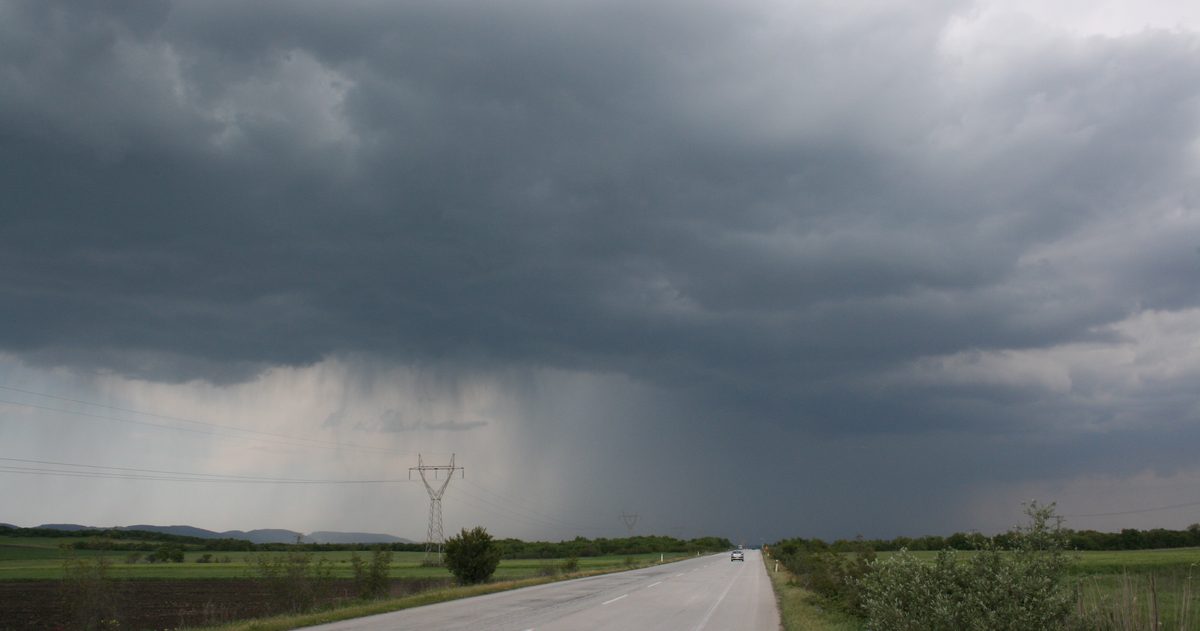
A special weather statement from Environment and Climate Change Canada (ECCC) is information, not an alert: it flags weather that is unusual, inconvenient or a cause for potential concern. A watch means conditions are favourable for severe weather to develop, so get ready. An advisory covers weather that is less severe than a warning but still significant, and a warning means severe weather is happening or will happen. For both, ECCC says act now. Since 26 November 2025, every watch, advisory and warning also carries a colour, yellow, orange or red, for how much impact to expect.
What are the types of Environment Canada weather alerts?
ECCC issues three types of alert, plus two kinds of message that are not alerts. The type tells you what kind of situation it is and what to do. The colour, explained in our guide to Environment Canada's yellow, orange and red alerts, tells you how big the impact could be.
| Message | What ECCC says it means | What to do | Colour |
|---|---|---|---|
| MetNote | A short note from a meteorologist that adds context to the forecast. Not a warning | Read it with your forecast | None, and no phone notification |
| Special weather statement | For information only, not an alert: weather that is unusual, inconvenient or a cause for potential concern | Stay aware and check for updates | None: grey on the map |
| Watch | Conditions are favourable for the development of severe weather | Get ready to protect yourself | Yellow, orange or red |
| Advisory | Specific weather that is less severe than a warning but still significant | Act now to protect yourself | Yellow, orange or red |
| Warning | Severe weather is happening or will happen | Act now to protect yourself | Yellow, orange or red |
The biggest change is at the bottom. ECCC's older guide to its alert maps (2022) shaded special weather statements dark grey next to red warnings and yellow watches. Today ECCC says it issues these statements "for information only, they are not an alert", and for low-impact weather that does not affect day-to-day activities it sends no alert at all and may write a MetNote or a special weather statement instead.
What is a special weather statement?
It is how ECCC explains weather that the regular forecast, watches and warnings do not describe well. ECCC's forecast guide lists the typical reasons to issue one:
- A reasonable chance that an event will have more impact than the forecast implies, or that warnings will follow, such as an approaching system with a history of severe thunderstorms.
- Significant weather around a major event, such as snow and cold wind chills for the Grey Cup.
- Weather that rarely hits the area and does not normally get a warning there, such as widespread fog with near-zero visibility.
- Unusual weather such as cold air funnels, waterspouts and dust devils, or an unusually long run of days with or without rain.
The guide says statements are not ended but expire on their own after 7 hours. A statement is not an emergency, but read it: when it says warnings are possible, a watch or warning may follow. A MetNote is lighter still. It appears on your local forecast page and at the bottom of the WeatherCAN app, and ECCC says it will not trigger a notification on your phone.
What is a weather watch in Canada?
A watch means conditions are favourable for the development of severe weather, and ECCC's instruction is to get ready to protect yourself. In practice, keep checking alerts and forecasts, know where you would shelter, and be ready to act if a warning follows. Watches still cover ECCC's broader, pre-determined alert zones, while severe thunderstorm and tornado warnings are now being targeted at the area most likely to see the highest impacts, a change ECCC announced on 12 August 2026 and is bringing in gradually.
Two tornado watches ECCC issued in Alberta in July 2026 show how a watch reads now. Both said "Conditions are favourable for the development of severe thunderstorms which may produce tornadoes." The one for Woodlands County on 15 July was an Orange watch - tornado; the one for Stettler County on 27 July was a Yellow watch - tornado. Same type, same hazard, different colours, because the colour comes from ECCC's judgement of impact and confidence, not from the type.
What is a weather warning?
A warning is ECCC's urgent message that severe weather is happening or will happen, and the instruction is to act now. ECCC's thunderstorm alerts spell out the test: "Severe thunderstorm warnings are issued when imminent or occurring thunderstorms are expected to produce damaging hail, wind or rain." What acting means depends on the hazard. For a tornado, Alberta's emergency alert for one of those July watches told people, if a tornado warning is issued, to go to a room on the lowest floor, away from outside walls and windows, such as a basement, bathroom, stairwell or interior closet, and to leave mobile homes, vehicles, tents and trailers for a strong building if they can. When and where tornadoes peak in Canada is covered in Canadian tornado season.
A warning no longer has one published number behind it. ECCC's old page of criteria for public weather alerts now says its Weather Impact Guides "replace the previous criteria". Forecasters judge the likely impact on travel, utilities, property and health instead, as our guide to how ECCC picks the colour explains.
How is an advisory different from a warning?
By severity. ECCC issues an advisory for specific weather events that are "less severe but still significant", and a warning for severe weather. The instruction is the same for both: act now to protect yourself, from significant weather in one case and severe weather in the other. Fog is a typical advisory: on 7 February 2026 ECCC issued a yellow advisory as dense fog brought low to near-zero visibility on roads in central and southeastern Saskatchewan. Treat an advisory as a reason to adjust your plans, not as background noise.
Watch vs warning: which is worse, and what should you do?
For the same hazard, a warning is more urgent than a watch: the watch says severe weather could develop, the warning says it is happening or will happen. The colour adds a second scale on top, so read both words of the alert name.
- Statement or MetNote: keep your plans, but read it and check the next forecast.
- Watch: get ready. Keep checking alerts and forecasts, and know where you would go if a warning is issued.
- Advisory or warning: act now. Change travel plans, get indoors or to shelter, and follow the actions in the alert text.
Whatever the type and colour, ECCC says to read the full alert, because every alert includes actions you can take to keep safe.
How do you get Environment Canada alerts?
- ECCC's Weather Information map: alerts show in yellow, orange or red and statements in grey. Select a coloured area to open the alert.
- WeatherCAN: ECCC's free app, which sends push notifications for severe weather.
- Alert Ready: the national public alerting system that interrupts TV and radio and sends alerts to mobile phones. ECCC uses it only for tornado warnings and for the most severe thunderstorm warnings: its criteria list wind gusts of 130 km/h or more and hail the size of a baseball (7 cm) or larger.
ECCC's forecasters set an alert's confidence from current observations, weather prediction models and their own expertise. To see how far the models agree before an alert goes out, our Canada forecast pages put Environment Canada's GEM, the European ECMWF and the American GFS side by side with a forecast confidence line and a flag on every day where they split, and our accuracy scoreboard shows which model has been closest over the last 30 days. That is context, not an alert: ECCC's watches and warnings are the official word.
Read the type for what to do and the colour for how bad it could get. A statement asks you to stay aware, a watch to get ready, and an advisory or warning to act now.