UV Index Explained: What 3, 6, 8 and 11+ Mean
The UV index runs from 0 to 11 and beyond, and 3 is the line WHO and the US, UK and Australian health agencies all use. Here is what each band means, what pushes the number up or down, and why two apps can disagree about it.
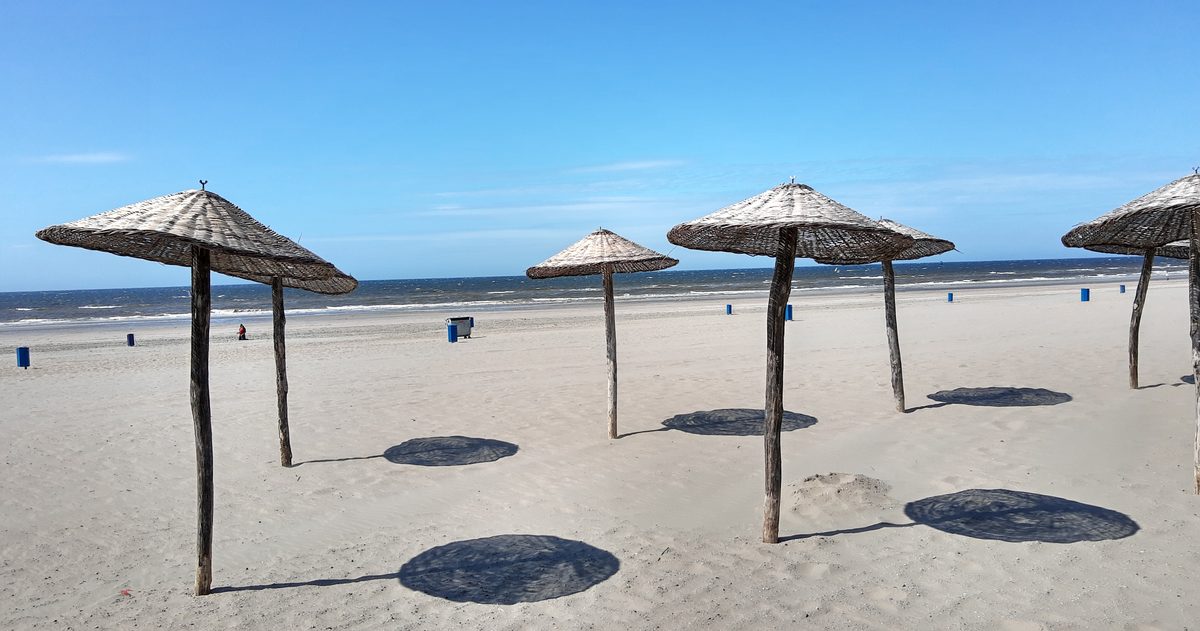
The UV index measures how strongly the sun's ultraviolet rays can burn skin at a given place and time, on a scale from 0 upward. At 3 or above, WHO, the EPA, the CDC and ARPANSA recommend sun protection and the NHS says to consider it; 6 to 7 is high, 8 to 10 very high and 11 or more extreme. The figure on a forecast is usually the day's peak around solar noon, the moment the sun is highest (about 1 pm local daylight time in the US), so the UV "right now" in the morning or late afternoon is often lower.
What do UV index 3, 6, 8 and 11+ mean?
The scale is a joint recommendation of WHO, the World Meteorological Organization, the UN Environment Programme and the radiation-protection body ICNIRP, and weather services use its five bands:
| UV index | Category | WHO color | WHO advice |
|---|---|---|---|
| 0 to 2 | Low | Green | No protection required: you can safely stay outside |
| 3 to 5 | Moderate | Yellow | Protection required: midday shade, shirt, sunscreen, hat |
| 6 to 7 | High | Orange | Protection required: midday shade, shirt, sunscreen, hat |
| 8 to 10 | Very high | Red | Extra protection: avoid the midday sun, seek shade; shirt, sunscreen and hat a must |
| 11+ | Extreme | Purple | Extra protection: avoid the midday sun, seek shade; shirt, sunscreen and hat a must |
The 11+ band has no ceiling: the Bureau of Meteorology notes there is no upper limit, and NOAA says the index can reach 15 or 16 in the tropics at high elevations under clear skies. National agencies word the advice differently, and disagree on sunscreen strength:
- US (EPA and CDC): the EPA groups the scale into three tiers. At 3 to 7, seek shade from late morning through mid-afternoon and use broad-spectrum SPF 15 or higher, protective clothing, a wide-brimmed hat and sunglasses; at 8 and above, extra protection. The CDC also uses 3 as the threshold.
- UK (NHS): if the UV index is 3 or higher, consider protecting your skin, with at least SPF 30 and at least 4-star UVA protection.
- Australia (ARPANSA): at 3 or above, use all five measures: protective clothing, SPF 50 or higher sunscreen, a hat, shade and sunglasses.
What does the UV index number actually measure?
It is a weighted measure of burning power, not of brightness or heat. The US method, described by the EPA, starts from a forecast of stratospheric ozone and the angle of the sun (set by latitude, day of year and solar noon), weights each UV wavelength by how strongly it reddens skin, adjusts for elevation and cloud, then divides by 25 and rounds to a whole number. It does not track temperature: ARPANSA notes that UV can be high on cool, clear days and usually peaks around midday, while temperature often peaks later in the afternoon. A high "feels like" temperature tells you about heat stress, not sunburn.
Why is the UV index highest around midday and in summer?
The height of the sun is the biggest factor, according to ARPANSA: the higher the sun, the shorter the path UV takes through the atmosphere. WHO says solar noon falls between local noon and 2 pm, depending on location and daylight saving time, and the daily maximum comes in the four hours around it; about 60% of the day's UV arrives between 10 am and 2 pm. The CDC puts the strongest UV in the continental US at 10 am to 4 pm daylight saving time; the NHS says the UK sun is strongest from 11 am to 3 pm, March to October.
Latitude and season do the rest. NOAA's 2006-2024 climatology shows June averages of 10 or more across much of the desert Southwest and 11.8 in Puerto Rico, while December averages fall to about 0 to 2 across the northern states and 7.1 in Puerto Rico. The NWS forecast for solar noon on October 12, 2026 shows the spread on a single day:
| City | Forecast UV index | Category |
|---|---|---|
| Anchorage, AK | 0 | Low |
| Bismarck, ND | 1 | Low |
| Seattle, WA | 3 | Moderate |
| New York, NY | 4 | Moderate |
| Denver, CO | 6 | High |
| Phoenix, AZ | 7 | High |
| Miami, FL | 8 | Very high |
| Honolulu, HI | 10 | Very high |
Elsewhere, the Met Office says the UV index in the UK does not exceed 8, with 8 rare and 7 possible on exceptional days around the summer solstice, while 9 and 10 are common around the Mediterranean. In Australia, ARPANSA says January averages are forecast at 11 or more across most of the country on clear days, and the Bureau of Meteorology says Hobart and Melbourne are the only capitals whose average maximum UV stays below 3 from June to August; Darwin and Brisbane need sun protection all year.
Do clouds, altitude, snow and water change the UV index?
Yes, and clouds block less than most people expect. Here is the EPA forecast model's cloud factor applied to a day that would be UV 10 or UV 6 under clear skies:
| Sky (EPA model) | UV that gets through | Clear-sky UV 10 becomes | Clear-sky UV 6 becomes |
|---|---|---|---|
| Clear | About 100% | 10 | 6 |
| Scattered clouds | 89% | 9 | 5 |
| Broken clouds | 73% | 7 | 4 |
| Overcast | 31% | 3 | 2 |
These are fixed factors in the EPA's model; real clouds vary, and WHO says variable cloud calls for a range of values. Even a fully overcast UV 10 day still lands on the protection threshold, and clouds can add UV: the Bureau of Meteorology says cloud sides can reflect it down to the ground. WHO lists the belief that you cannot get sunburned on a cloudy day among common misconceptions, and the NHS warns you can burn in the UK even when it is cloudy.
The agencies' figures for altitude and reflection differ, so WHO's come first:
- Altitude: thinner air absorbs less UV. WHO's guide says UV rises 10 to 12% for every gain of about 3,300 feet (1,000 m); the EPA's forecast model adds about 6% per kilometer.
- Snow: WHO says fresh snow can reflect as much as 80% of UV and can double your overall exposure, especially at high altitude; the Bureau of Meteorology says fresh snow can increase UV by around 90%.
- Sand and water: WHO puts dry beach sand at about 15% and sea foam at about 25%; the Bureau says dry sand can increase your exposure by 20% and water by about 10% above its surface.
- Shade: WHO says shade can cut UV by 50% or more, but the Bureau notes that sand can still reflect UV onto you in the shade.
Why do weather apps show different UV index values?
Usually for one of four reasons:
- Daily peak versus right now. The NWS forecast is valid at solar noon, and the Bureau of Meteorology's daily figure is the maximum for midday. An hourly "UV now" will be lower in the morning and late afternoon.
- Clear sky versus cloud-adjusted. The NWS and Met Office forecasts include forecast cloud. The Bureau of Meteorology's daily UV forecast assumes cloud-free skies, and ARPANSA's predicted line also assumes no cloud, which is why it often differs from what its detectors measure. WHO says forecasts without cloud effects should be labeled "clear sky", so check which kind your source gives.
- Different models. The US forecast comes from an NWS model fed by NOAA satellite ozone data; Australia's comes from the Copernicus Atmosphere Monitoring Service run by ECMWF. Different ozone, cloud and elevation inputs give different answers.
- Rounding. WHO says the index should be shown as a whole number, so a model value of 4.4 shows as 4 and 4.6 as 5.
A real example: for New York on October 12, 2026, the NWS forecast UV 4 at solar noon, while Open-Meteo, the open data service checkweather uses for forecasts, gave a daily maximum of 4.85 for the same day, which an app would round to 5. In forecasts retrieved on October 12, 2026, for Seattle on October 14, Open-Meteo's cloud-adjusted maximum was 1.35 against a clear-sky maximum of 3.65: one app could show 1 and another 4 for the same afternoon. It is the same reason weather forecasts disagree on rain.
When should you protect your skin?
Go by the UV forecast, not the thermometer: the Bureau of Meteorology says UV is not related to temperature and warns that cool days in spring and summer catch people out.
- Use the 3 threshold. Australian forecasts show daily sun protection times, the hours when protection is recommended. The Bureau also advises protection below 3 if you are outside for long periods or near reflective surfaces such as water or snow.
- Check your shadow. Under the EPA's shadow rule, if your shadow is shorter than you are, UV is higher: seek shade and protect your skin and eyes.
- Do not wait for redness. ARPANSA notes that sunburn may not show on the skin for 16 to 24 hours after a high UV dose.
- Know if you burn easily. The NHS says to take extra care if you have pale, white or light brown skin, freckles, red or fair hair, many moles, or tend to burn rather than tan.
Where can you check today's UV index?
- US: the NWS calculates the UV forecast for most ZIP codes and the EPA publishes it. NOAA's Climate Prediction Center also issues a bulletin for 58 cities each afternoon, around 1:30 pm Eastern Standard Time (about 2:30 pm during daylight saving time), valid at the next day's solar noon.
- UK: Met Office forecasts, which include forecast cloud.
- Australia: Bureau of Meteorology forecasts give the daily maximum and sun protection times; ARPANSA publishes live measured UV, updated every minute.
checkweather compares and scores temperature, wind and rain forecasts, as our methodology explains, but we do not grade UV forecasts, so use the national services above for UV. Our hubs for the US, UK and Australia cover the rest of the forecast.
In short: 3 means protect, 8 means extra protection, and 11+ has no ceiling. When two apps disagree, check whether you are seeing the noon peak or the current hour, and whether cloud is included.