How are UK storms named?
Storms hitting the UK, Ireland and the Netherlands share a single annual A-Z list - and they only earn a name when the weather is serious enough to warrant it.
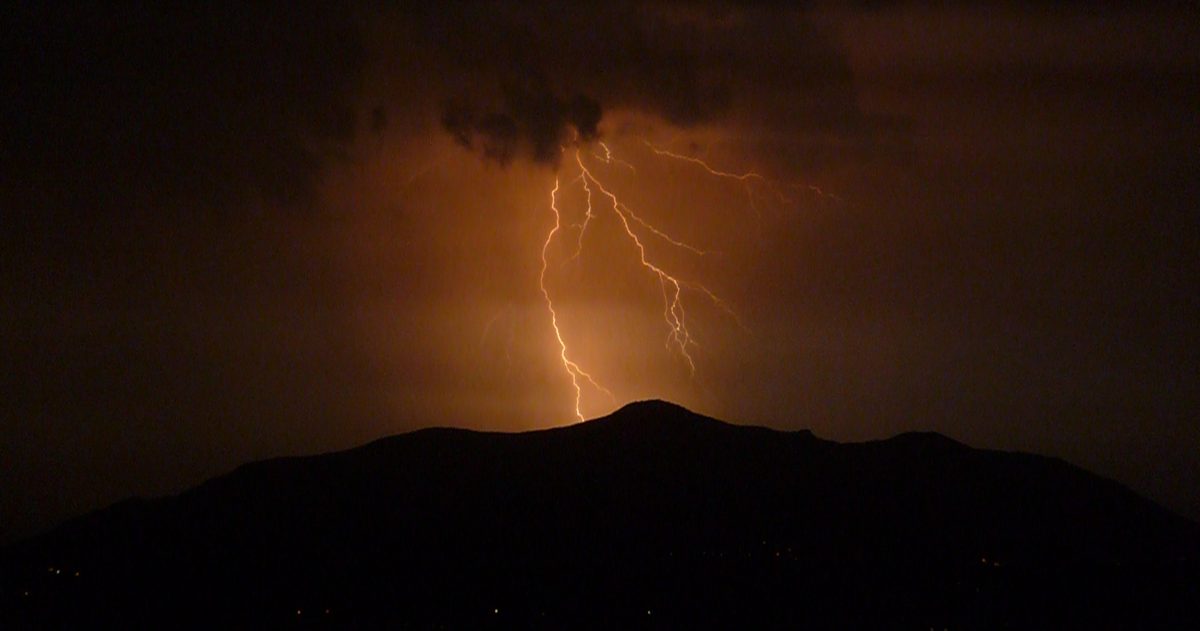
UK storms are named by the Met Office jointly with Ireland's Met Éireann and the Dutch weather service KNMI. A storm is named when it is expected to cause enough disruption to warrant an amber or red warning - the medium-to-high impact end of the scale. Names are worked through an agreed alphabetical list each year, running from early autumn to late summer, and the aim is simple: one clear name so everyone talks about the same storm.
Why does the UK name storms at all?
Naming began in 2015 with the Met Office and Met Éireann "Name our Storms" project, and KNMI joined the group in 2019. The reasoning is communication. Research and experience showed that a single, memorable name makes people far more likely to notice a warning, understand that it applies to them, and act on it. Instead of competing descriptions - "the low pressure system", "the Atlantic storm", "that big blow at the weekend" - a named storm gives broadcasters, emergency services and the public one shared reference point.
Who decides the names?
Three national meteorological services form the naming group: the Met Office (UK), Met Éireann (Ireland) and KNMI (Netherlands). Because weather systems crossing the North Atlantic often hit all three countries, coordinating means a storm carries the same name whether it makes landfall in Cork, Cornwall or Rotterdam. The group agrees a list before the season starts and takes it in turn, in effect, as storms develop and meet the criteria.
When does a storm get a name?
The trigger is impact, not a fixed wind speed. A system is named when it is forecast to cause an amber or red warning - in other words, when it is likely to bring medium or high impacts such as danger to life, widespread travel disruption, power cuts or structural damage. That is why a modest-sounding low can be named if it hits an exposed, vulnerable area, while a technically stronger system out over open sea might not be. Wind is the most common reason for naming, but a storm can also be named principally for the impacts of rain or snow.
| Question | Answer |
|---|---|
| Who names UK storms? | Met Office, Met Éireann and KNMI, jointly |
| What triggers a name? | Forecast amber or red warning (medium/high impact) |
| When does the list start? | Early September, running to the following August |
| How are names ordered? | Alphabetically, alternating male and female |
| Which letters are skipped? | Q, U, X, Y and Z |
How does the yearly list work?
Each storm season the group publishes a list of names running alphabetically - Storm A, then B, then C and so on - alternating between male and female names. Following the long-standing convention shared with the US National Hurricane Centre, the letters Q, U, X, Y and Z are not used, because there are too few suitable, common names beginning with them. The season runs from the start of September to the end of the following August, so a new list begins each early autumn to coincide with the arrival of the stormier months.
Where do the names come from?
Many names are suggested by the public. The Met Office runs a "Name our Storms" campaign inviting people across the UK, Ireland and the Netherlands to send in ideas, often reflecting names that mean something to them. The naming group then selects a balanced list from these suggestions. It is a deliberately participatory process - part of keeping the warnings visible and relatable - though the group avoids names that could cause confusion or offence.
What about storms named elsewhere?
Not every storm affecting the UK gets a British name. If a storm has already been named by another national meteorological service before it reaches the UK - for example a system named by the French, Spanish, Portuguese or German services under the broader European naming arrangements - the Met Office keeps that existing name to avoid confusion. Occasionally the remnants of a tropical storm or ex-hurricane that originated in the Atlantic and was named by the US National Hurricane Centre will track towards the UK; these retain their original name, prefixed with "Ex-", such as Ex-Hurricane. The principle throughout is one storm, one name.
Does naming change the forecast?
Naming is a communication tool, not a forecasting one - the science underneath is the same whether or not a storm has a name. What a name does is sharpen attention, which is exactly when it helps to look at how confident the forecast actually is. At checkweather.io we place the Met Office, ECMWF and GFS models side by side and turn their agreement into a plain-English confidence score. When a named storm is several days out, that comparison shows whether the models are locked onto the same track and intensity - high confidence - or still disagreeing, which is common with fast-moving Atlantic systems. The name tells you a storm is coming; comparing the models tells you how settled its path really is.
Before you rely on one app, see which UK forecast is most accurate.