GFS vs ECMWF: Why the European Model Often Beats the American One
The Euro tends to lead in medium-range accuracy, and Hurricane Sandy in 2012 is the textbook proof.
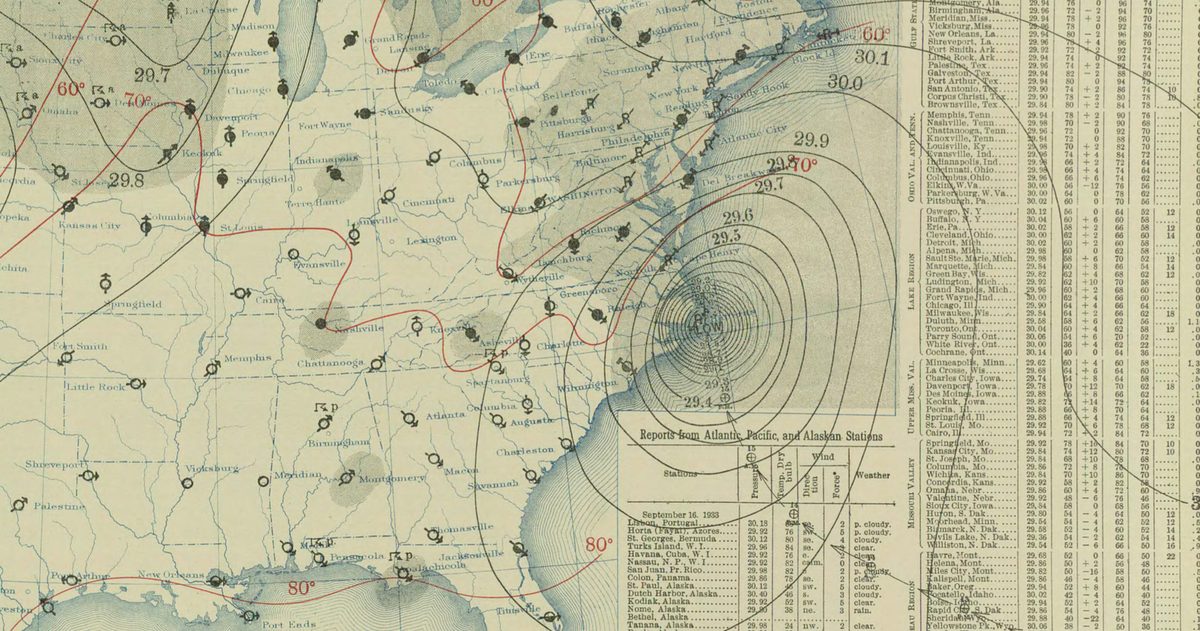
The ECMWF (the European model) often beats the GFS (the American model) mainly in medium-range accuracy, where independent verification has generally ranked the Euro first. The reasons come down to resolution, data assimilation, and sustained investment. The most famous example is Hurricane Sandy in 2012, when the ECMWF forecast the storm's turn into the US Northeast several days before the GFS did.
Who runs each model?
The GFS, or Global Forecast System, is run by NOAA and the US National Weather Service. The ECMWF is run by the European Centre for Medium-Range Weather Forecasts, an independent intergovernmental organization based in Reading, England, and supported by dozens of member states. That single-purpose focus, funded by many nations specifically to be the best medium-range model, is part of the story.
How do they compare on paper?
| Feature | GFS (American) | ECMWF (European) |
|---|---|---|
| Operator | NOAA / NWS (US) | ECMWF (Europe) |
| Resolution | ~13 km | ~9 km |
| Runs per day | 4 (00/06/12/18 UTC) | 2 (00/12 UTC) |
| Ensemble members | 31 (GEFS) | 51 (ENS) |
| Forecast range | To 16 days | To 15 days |
| Access | Free, open | Largely subscription; open data expanding |
| Medium-range skill | Strong | Generally highest |
Why does the ECMWF often win?
No single trick explains the gap; it is the sum of several advantages.
- Higher resolution. The ECMWF runs at roughly 9 km versus the GFS's 13 km, and its 51-member ensemble also runs at that fine resolution, so it can resolve finer features.
- Data assimilation. The Euro has long been recognized for how well it ingests and blends observations into an accurate starting state. Because forecasts are exquisitely sensitive to their initial conditions, a better starting analysis compounds into a better forecast.
- A larger ensemble. With 51 members against the GEFS's 31, the ECMWF ensemble samples more possible futures, which sharpens its probability estimates.
- Focused mandate and investment. The ECMWF exists to be the world's best medium-range model, funded by its member states for exactly that.
The Hurricane Sandy case (2012)
Sandy is the example that pushed this debate into the mainstream. According to the National Hurricane Center's official report, on 23 and 24 October 2012, while Sandy was still in the Caribbean, the ECMWF consistently forecast a Northeast US landfall, while the GFS consistently took the storm out to sea. The Euro was among the first to show the crucial northwestward turn six to seven days out. That difference of days of lead time, for a storm that would devastate the New Jersey and New York coastline, made the accuracy gap impossible to ignore and helped justify the US investment that produced the modern FV3-based GFS.
What has the US done to close the gap?
The accuracy gap has been public knowledge for years, and NOAA has responded. The 2019 switch to the FV3 dynamical core was the headline move: a modern engine designed to improve the model's handling of the atmosphere and to serve as the foundation for future upgrades. NOAA followed with a rebuilt ensemble, GEFS version 12, in September 2020, expanding to 31 members at higher resolution. The agency has also invested in supercomputing and in the broader Unified Forecast System, a community effort to modernize how US models are built. None of this guarantees the GFS overtakes the ECMWF, but it has narrowed a gap that Sandy made impossible to ignore.
It is worth being precise about what "the Euro is better" means. It is a statement about average verification scores over many forecasts, not a guarantee about any single day. On a given storm, the GFS can and does win. That is exactly why professional forecasters never crown one model permanently; they judge run by run.
Does that mean you should ignore the GFS?
No. "Often beats" is not "always beats." The GFS updates twice as often, is completely free and open, and performs strongly in the short range, and there are plenty of individual storms where it verifies better than the Euro. Betting everything on one model in every situation is exactly the mistake to avoid.
The smarter approach is to watch both. When the GFS and ECMWF agree, confidence is high. When they split, that disagreement is a flashing signal of uncertainty. This is the core idea behind checkweather.io: it lines up the GFS and ECMWF side by side, turns their agreement into a plain-English confidence score, and grades each against what actually happened, so you can see which model is winning this week rather than relying on reputation alone.
How to watch both models in practice
You do not need a meteorology degree to benefit from comparing the GFS and ECMWF. A simple routine works: check the overall pattern on the ECMWF, then flip to the GFS and see whether it tells the same story. Pay attention to consistency across runs, too. A model that has shown the same solution for several consecutive runs is more believable than one that flip-flops every six hours. And when a big event is on the table, look at the ensembles rather than the single deterministic runs, because the spread among members tells you how much genuine uncertainty exists.
The one habit that separates good forecast reading from bad is refusing to cherry-pick. It is tempting to latch onto whichever model shows the weekend you want. The disciplined approach is the opposite: trust the outcome the models agree on, and treat divergence as a warning to stay flexible. Tools that automate this comparison remove the temptation entirely by scoring agreement for you.
The bottom line
The European model has earned its reputation as the medium-range leader through resolution, data handling, ensemble size, and focused investment, and Sandy remains the vivid proof. But the American GFS is a capable, frequently updated, freely available model that is far from a runner-up in every case. The reliable move is not to pick a favorite; it is to compare them and let their disagreement tell you how much to trust the forecast.
Rather than trust a single forecast, see which US forecast is most accurate.