Can cold weather make you sick?
Cold air does not give you a cold. Viruses do, and winter hands them several advantages, from crowded rooms to a nose that runs several degrees cooler.
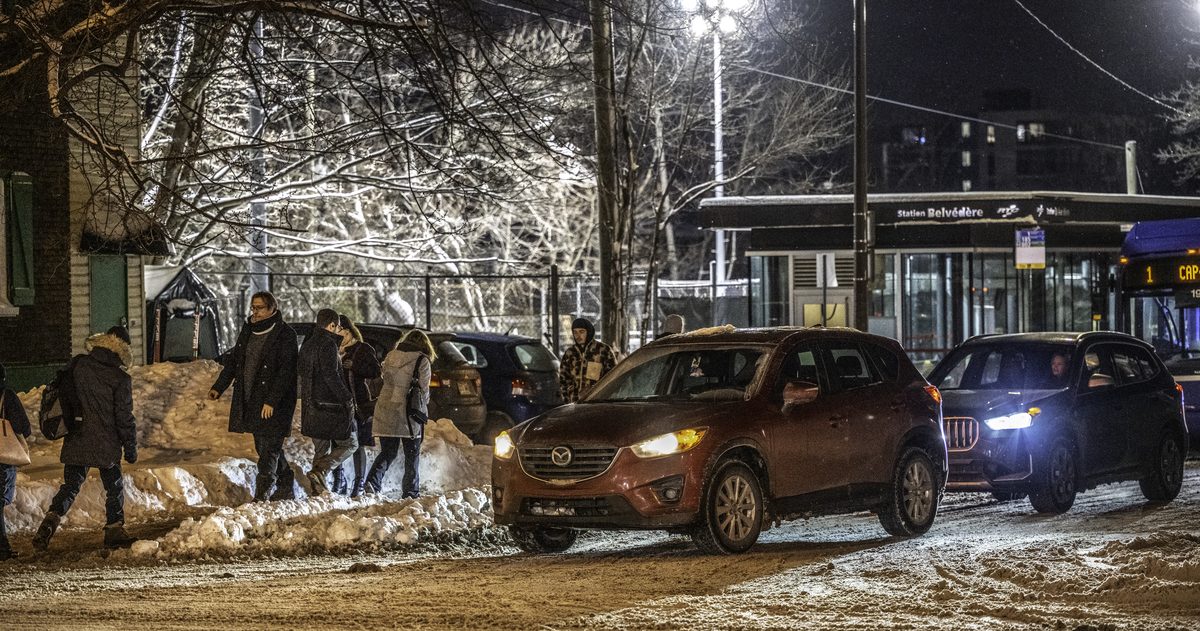
Cold weather does not make you sick on its own: colds and flu are caused by viruses, and the CDC counts more than 200 respiratory viruses that can cause a cold. What winter does is help those viruses spread and take hold, through crowded rooms, dry air and a nose that cools by several degrees when you breathe cold air. The illnesses that cold itself causes are hypothermia, frostbite and other cold injuries, and those have clear temperature thresholds.
Does cold weather make you sick, or do viruses?
Viruses. The CDC names rhinoviruses as the most frequent cause of colds in the United States, alongside common human coronaviruses, parainfluenza viruses, adenoviruses, enteroviruses and human metapneumovirus. They spread through droplets from coughs and sneezes, through contaminated surfaces and through close contact such as a handshake. US adults average two to three colds a year, and children often have more. No virus, no cold, however low the thermometer goes.
The experiments agree. A 2002 review from the Common Cold Centre at Cardiff University summed up trials in which volunteers had cold viruses put into their noses and were then exposed to cold: they "failed to demonstrate any effect of cold exposure on susceptibility to infection with common cold viruses." So the folk version, that a chill alone gives you a cold, is not supported. The better question is why colds and flu still pile up in the cold months.
Why do colds and flu peak in winter?
The CDC says US flu season usually runs through fall and winter, and most of the time flu activity peaks between December and February. Across the 1982 to 2024 seasons it peaked in February 17 times, more than any other month. A 2020 review in the Annual Review of Virology (Moriyama, Hugentobler and Iwasaki) groups the explanations into two families, changes in the environment and changes in human behavior, and the evidence points to several at once:
- People crowd indoors. The NIH's MedlinePlus Magazine puts it plainly: people are more likely to gather indoors to avoid the cold, which makes it easier for viruses to spread.
- The air is dry. Reanalyzing lab data, Shaman and Kohn (PNAS, 2009) found that absolute humidity (the actual amount of water vapor in a given volume of air) explained 50% of the variation in flu transmission and 90% of the variation in virus survival, against 12% and 36% for relative humidity. In temperate regions, absolute humidity outdoors and indoors bottoms out in winter.
- Cold favors the virus. In guinea pig experiments by Lowen and colleagues (PLoS Pathogens, 2007), flu spread best in cold, dry conditions. Animals kept at 41°F (5°C) shed virus at peak levels about 40 hours longer than animals kept at 68°F (20°C), although their innate immune response was no weaker.
- The virus coat toughens. NIH scientists reported in 2008 that the flu virus's fatty outer coat solidifies into a protective gel at temperatures slightly above freezing and gradually melts as temperatures approach 60°F (16°C).
Not every winter bug keeps flu's calendar. The CDC says you can get a cold any time of year. Flu and RSV usually circulate in winter, but the CDC is clear that they cause cold-like symptoms, not colds; other viruses that can cause cold symptoms circulate in spring, summer or fall.
What happens inside a cold nose?
This is where cold air itself comes back into the story. Two lines of lab research suggest that breathing cold air cools the lining of the nose enough to blunt its defenses.
A Yale team (Foxman, Iwasaki and colleagues, PNAS, 2015) started from a long-known fact: most rhinovirus strains replicate better at nasal temperatures of 91 to 95°F (33 to 35°C) than at the core body temperature of 98.6°F (37°C). In mouse airway cells, they found the cells mounted a stronger interferon-based antiviral response (the alarm signal cells send out against viruses) at 98.6°F than at 91°F, so the virus grew more easily in the cooler cells.
In a study published in late 2022 in the Journal of Allergy and Clinical Immunology, a Mass Eye and Ear and Northeastern University group (Huang, Bleier and colleagues) measured healthy volunteers' noses with an endoscope after the ambient air temperature around them dropped from 74°F to 40°F (23.3°C to 4.4°C). The temperature inside the nose fell by up to 11.5°F (6.4°C) at the front and 8.5°F (4.7°C) further back. When the researchers cooled nasal cells and fresh surgical nasal tissue by a similar 9°F (5°C), the cells released fewer extracellular vesicles, tiny sacs that nasal cells release into the mucus to trap viruses, and those vesicles carried less of an antiviral microRNA and bound viruses less well. The authors call it a mechanistic explanation for the winter rise in upper respiratory infections.
Both are lab studies on cells and tissue, not trials showing that people who go out in the cold catch more colds. They explain how cold could help a virus you have already met, not how cold could create an infection.
Can getting chilled bring on a cold?
Possibly, in people who are already carrying a virus, and the evidence is thin. In a 2005 trial in Family Practice, Johnson and Eccles randomized 180 healthy volunteers to a foot chill or a control procedure. In the next 4 to 5 days, 13 of the 90 chilled volunteers reported a cold, against 5 of the 90 controls. The volunteers who developed a cold also said they usually got more colds each year. The symptoms were self-reported, and the authors wrote that further studies were needed to link them to an actual respiratory infection.
The 2002 Cardiff review's hypothesis is that chilling the body surface narrows blood vessels in the nose and upper airways, which may weaken local defenses and turn a silent infection into one with symptoms. That is a plausible mechanism, not an established fact, and it still requires the virus to be there first.
Can a sudden weather change make you sick?
Here the evidence is weak. The most direct data come from Finland. Both studies below followed the same 892 military conscripts, who joined the Kainuu Brigade in July 2004 and January 2005 and trained in a subarctic climate:
| Study | What was measured | Finding |
|---|---|---|
| Mäkinen and colleagues, Respiratory Medicine, 2009 | 643 diagnosed respiratory infections against outdoor weather | Temperature and humidity fell in the days before infections began; each 1 g/m³ drop in absolute humidity raised the estimated risk of upper respiratory infection by 10% |
| Ikäheimo and colleagues, Viruses, 2016 | 147 rhinovirus infections confirmed by lab test | Risk rose 8% for each 1.8°F (1°C) drop in temperature over the three preceding days; average temperature before infection was 14°F (minus 9.9°C) |
The authors of the 2016 study concluded that a decrease in temperature and humidity, rather than low values as such, raised the risk. But these are observational studies of one group of conscripts in one cold climate. They show that infections followed cold snaps, not that the change in weather caused them, and they say nothing about weather swings in milder climates.
The illnesses cold weather really causes
Unlike colds, these are caused by the cold itself, and the thresholds are published:
| Condition | Threshold | Source |
|---|---|---|
| Hypothermia | Body temperature below 95°F (35°C); can happen even above 40°F (4°C) if you are chilled by rain, sweat or cold water | CDC |
| Frostbite | Air temperature must be below 32°F (0°C); at 0°F (minus 18°C) with a 15 mph (24 km/h) wind, the wind chill is minus 19°F (minus 28°C) and exposed skin can freeze in 30 minutes | NWS |
| Trench foot | Can occur at temperatures as high as 60°F (16°C) if the feet are constantly wet | CDC (NIOSH) |
| Chilblains | Repeated exposure of skin to temperatures from just above freezing to 60°F (16°C) | CDC (NIOSH) |
The CDC's warning signs of hypothermia in adults are shivering, exhaustion, confusion, fumbling hands, memory loss, slurred speech and drowsiness; in babies, bright red, cold skin and very low energy. If a person's temperature is below 95°F, the CDC says to get medical attention immediately. Frostbite shows as white or grayish-yellow skin, skin that feels unusually firm or waxy, and numbness; the CDC says not to rub the area and not to use a heating pad or electric blanket.
For hypothermia, the CDC says those most at risk include older adults with inadequate food, clothing or heating, babies sleeping in cold bedrooms, and people who stay outdoors for long periods, such as people experiencing homelessness, hikers and hunters.
Using the forecast on a cold day
For frostbite and hypothermia risk, the wind chill tells you more than the air temperature alone; our guide to wind chill vs feels like explains the NWS formula and why apps show different values. Cold Weather Advisory and Extreme Cold Warning criteria are set by each local NWS office: around Rochester, New York, the warning comes at minus 25°F (minus 32°C) or colder. Our guide to freeze warnings and frost advisories explains which cold products the NWS issues in which season, and what to wear at 40, 50, 60 and 70 degrees covers dressing for the milder end.
Forecast sources often disagree on how cold a morning will feel. On our US city pages, Minneapolis for example, the NWS blend, the American GFS and the European model each show their own feels-like temperature, wind and humidity side by side, so a split is visible before you head out. Our list of US cities covers every town we forecast.
For the viruses, the CDC's core advice for respiratory illness season is to stay up to date with recommended immunizations, wash your hands regularly, take steps for cleaner air where people live and work, and stay home and away from others when you are sick.
A cold day will not infect you, but it makes the people and the air around you better at passing a virus along, and it may give that virus an easier start in your nose. Dress for the wind chill to avoid the injuries cold really does cause, and treat the winter cold and flu risk as something you catch from people.